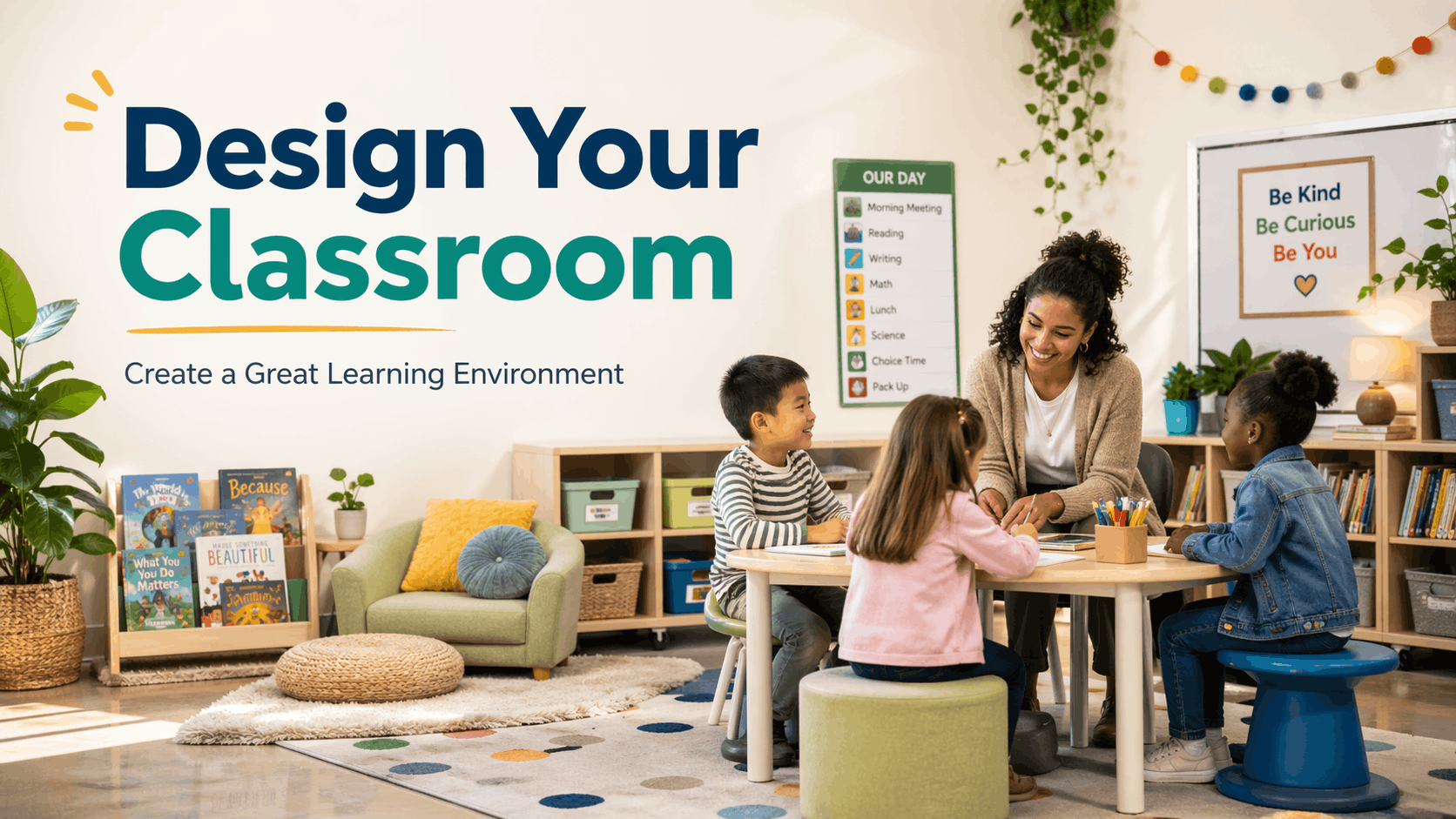
Can you describe a classroom? It is a square or rectangular room with a large desk for the teacher, rows of tables and chairs for pupils and maybe a few posters on the walls. Is that it? Unfortunately, this traditional and static classroom layout is still the most used all around the globe. Nonetheless, we know that designing a safe, orderly yet beautiful and flexible space for our students can improve their learning.
Several decades ago, Italian educator Loris Malaguzzi already insisted on the importance of the learning environment. According to him, the learning process cannot be separated from the social and environmental aspects. Other theories consider learning mostly as an internal process whether Malaguzzi, through his Reggio-Emilia approach, focuses on group work, interaction and the setting that can make these social relationships meaningful. Emotions also play an important role in learning: feeling safe, comfortable, at ease and visually stimulated helps children in their cognitive development. That is why classroom design should be taken much more seriously than it generally is!
How to Rethink Our Classroom Design and Layout
Designing a classroom is not the same as mere decorating. It requires purpose: classroom design should foster both content and process skills, for instance: organization, planning, time management, memory but also emotional control, attention, flexibility and persistence*. The question is how can design actually help my students work on all these essential skills.
Although teachers are not architects, they know their classroom like nobody else and have a strong sense of how to improve the place where they and their pupils spend most of the day. Teachers should not hesitate to try new layouts and create new working spaces and see the results in terms of learning. That is why we offer you a list of ten elements to take into account when planning a new classroom design.
10 Tips to Create a Great Classroom Design
1. Involve Your Students in the Process
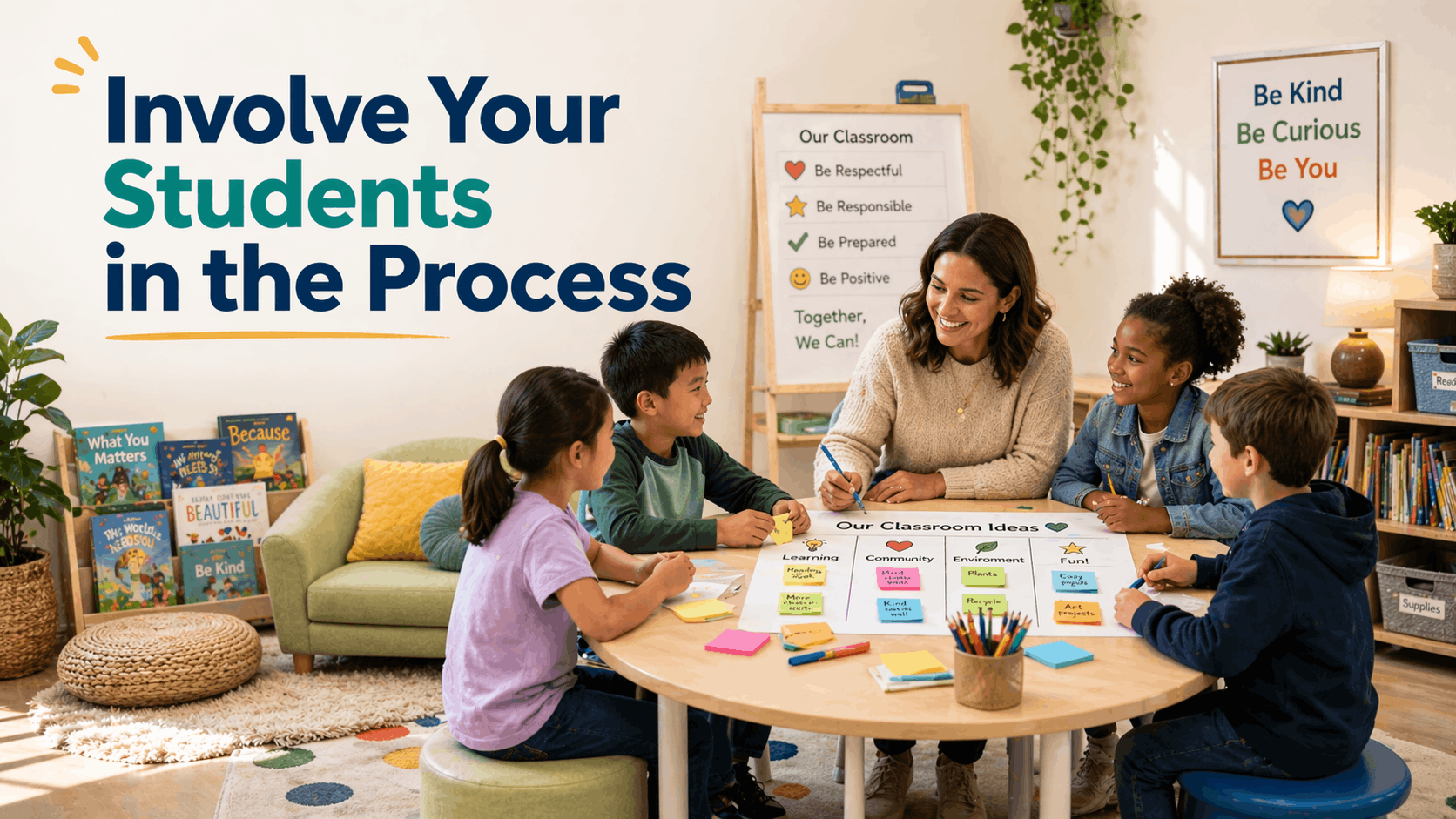
Classroom design ought to be a democratic process! That is why you should always ask your students what they think and what they need. You can ask them about what is useful, practical or beautiful in their classroom or, on the contrary, what gets in the way of their learning. You will be surprised as they will certainly come up with plenty of great ideas on how to improve their own learning environment.
2. Change Decoration and Setting Regularly
Every once in a while, you can ask your pupils: “What is on the walls that no longer serves you?” If there are a lot of elements, then it is time for redecoration. Actually, you can add an element of surprise every day or every week by adding something new in your classroom. Posters that have been on the walls for too long and are not useful anymore should be removed at the appropriate time.
3. Vary the Seating
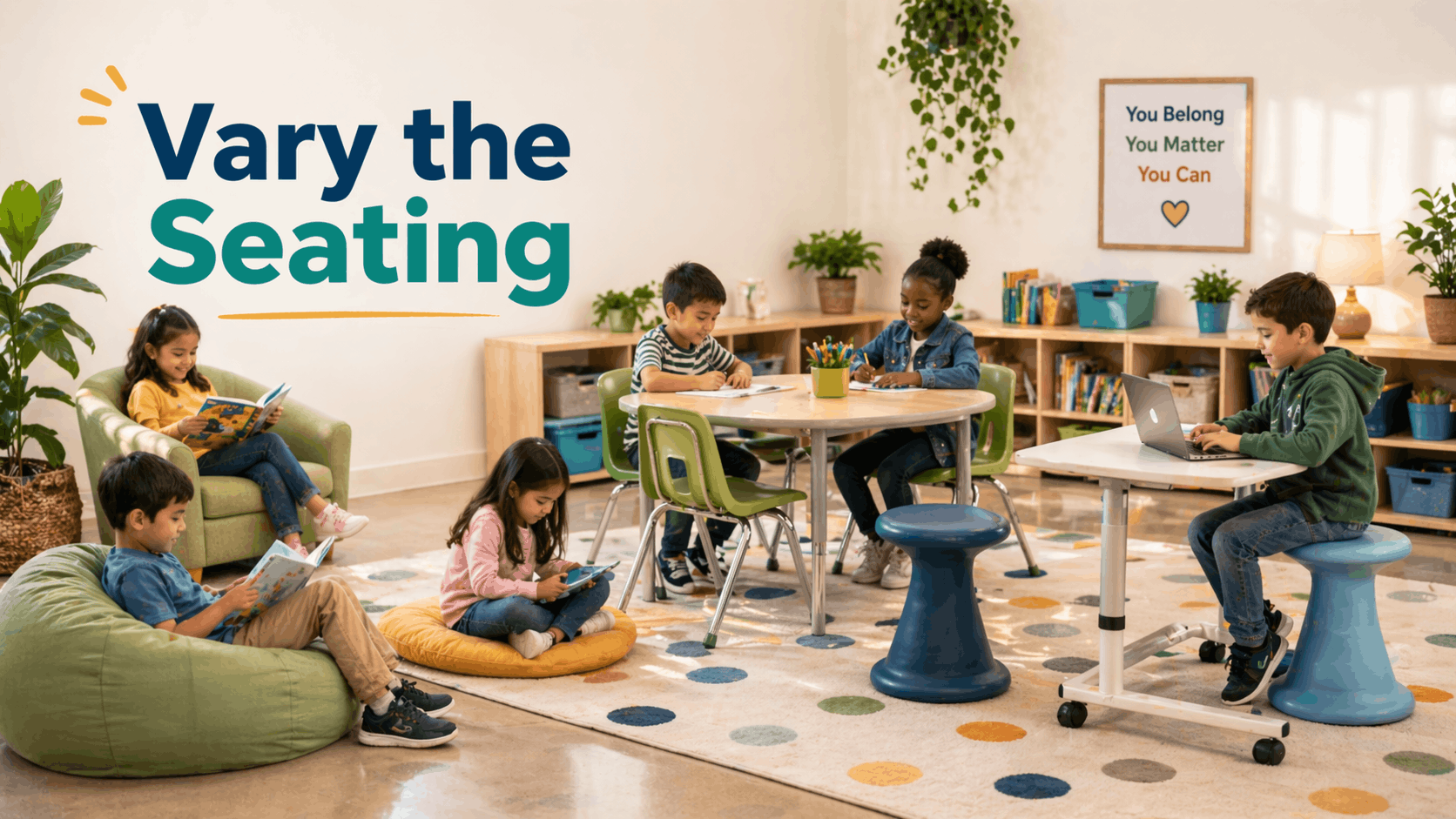
Make sure you possess several seating arrangements. You don’t necessarily need to buy new furniture, you can simply change the seating options by moving a few tables and chairs around. For instance, you can create clusters for group work, a long row of tables for face to face interaction or sit in a circle without tables for debates and games.
4. Don’t Forget the Walls!
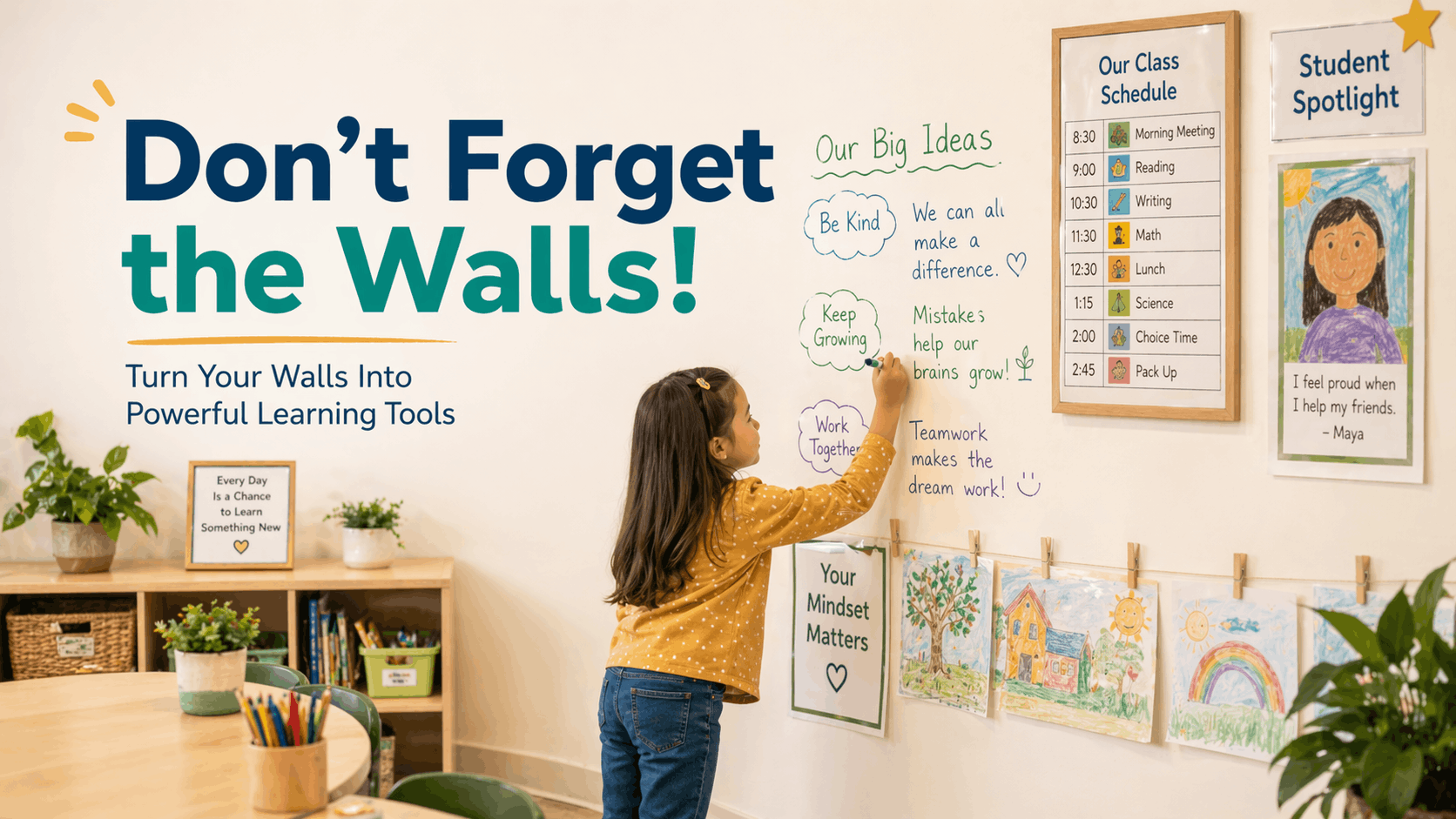
We often think about layout and furniture but walls are extremely important. Each element on the wall needs to have a specific learning purpose beyond decoration. You can use the walls to showcase works done by students or important motivational and educational posters. Remember to change posters regularly and leave some blank spaces: don’t overcrowd your walls as it could be counterproductive.
5. Choose Colors Carefully
We tend to decorate our classrooms with a lot of bright colors. We must be careful though not to overdo it. Eyes need to rest at times and a neutral color can help you achieve concentration and calm. You can add two or three other colors that can brighten up the whole room without overstimulating the eyes.
6. Include Collective and Individual Spaces
A classroom is obviously a collective space that needs to be shared. You can create spaces for collaboration but don’t forget that they are times when students need to be alone to focus on a specific task, like drawing, reading or creating art or craft. Your classroom should be flexible and easy to rearrange to fit all your students’ needs.
7. Make Your Students Feel Like Home
To make them feel at home, students need at least one space that is exclusively theirs. It can be as simple as a coat hanger, a locker or a spot on the wall. Besides, pay attention to details like room temperature and cleanliness.
8. Bring Actual Life Into Your Classroom
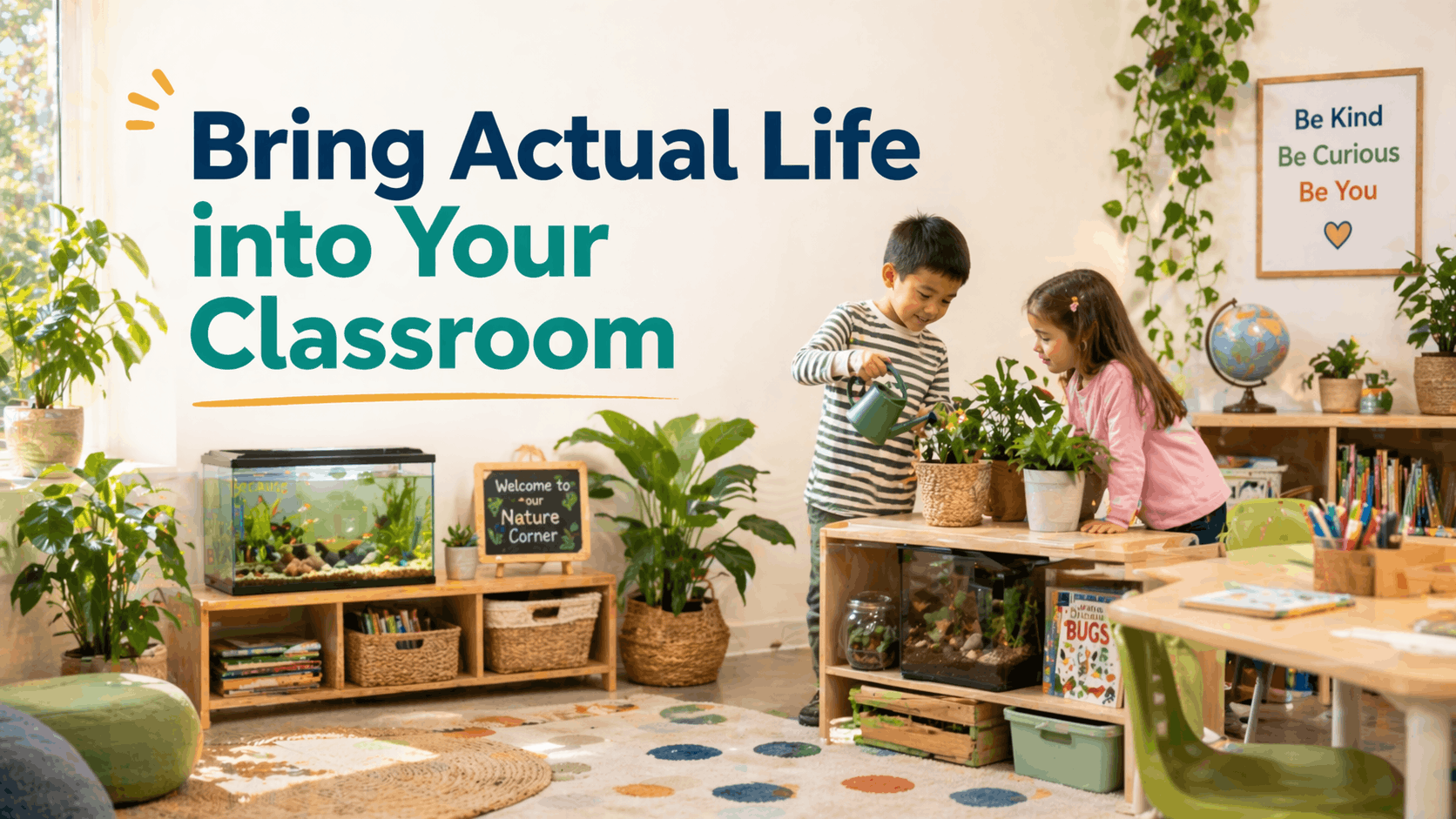
A building and a room are lifeless spaces if we don’t fill them up with life. Besides human presence, why not add fauna and flora in them? Moreover, taking care of plants and animals will teach them a lot about the natural world, such as plant and animal life cycles.
9. Take the Classroom Outside
Although classrooms are limited spaces, they are not prisons! That is why you should try to expand your horizons and use all the other school spaces available. There are a lot of hallways in a school and they can be rather dull. So, take your classroom outside and decorate halls and other spaces. In addition, there are a lot of activities that could benefit from a different environment.
10. Design Areas With Specific Purposes
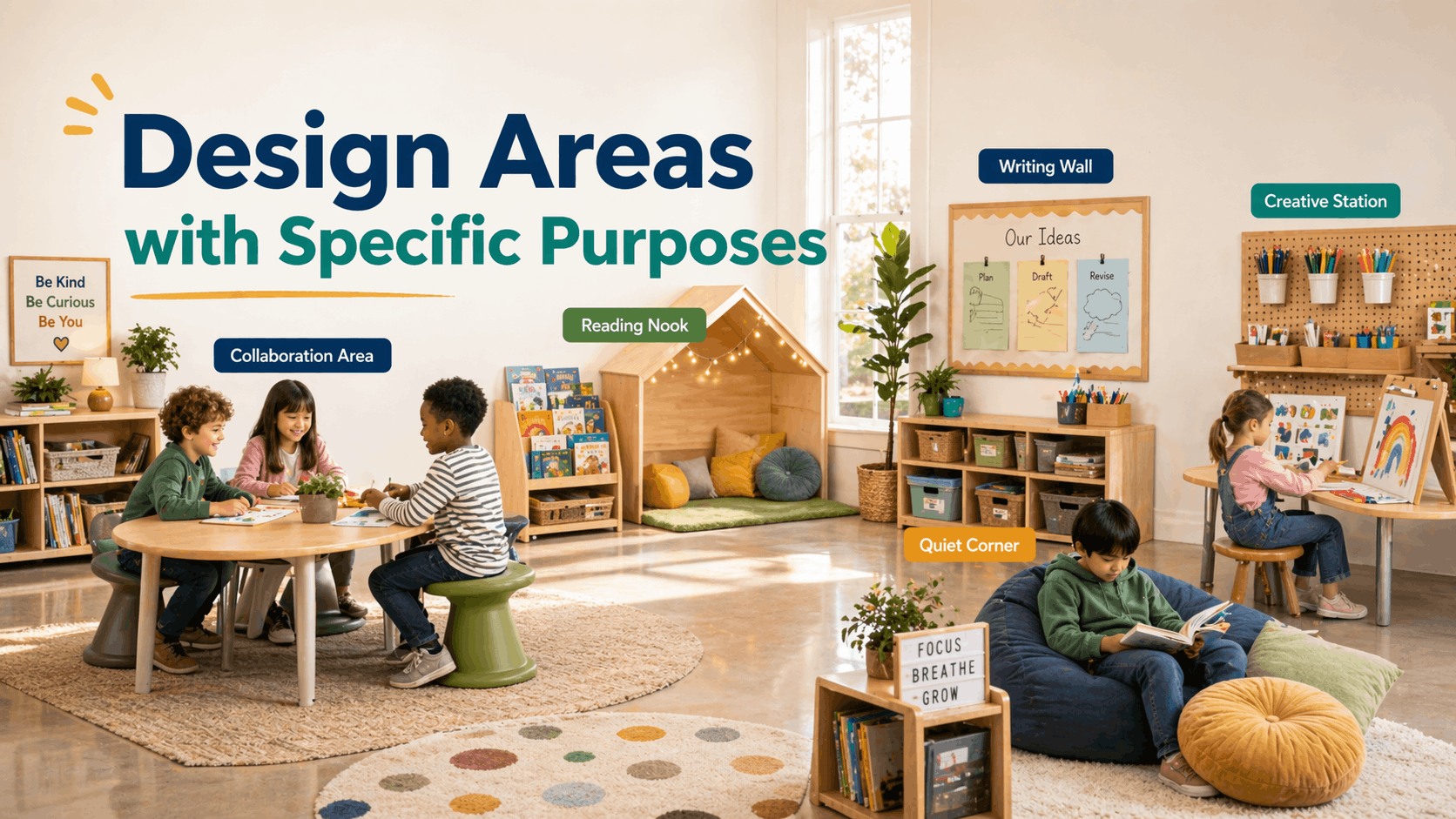
- Collaboration
Spaces to work in groups are essential and they can take many shapes: round tables, open spaces, rugs, clusters…
- Creation
For arts, crafts and other creative activities, we need large clear spaces with easy access to materials.
- Reading and Other Calm Moments
Everyone needs some quiet moments for reading, thinking or just relaxing and breathing. Make sure you have at least one place where children can feel safe and relaxed and have some Me Time.
- Writing
Teachers should not be the owners of the whiteboard and all other writing spaces. Always leave a writing space for your pupils to express themselves!
- Moving
You may have to move a few tables apart but remember that moving the body and stretching are really important, even inside a classroom.