Everybody needs contact with nature. It is part of who we are as humans. Living in an era of digital devices, omnipresent screens and virtual reality made us realize that we cannot forget 200,000 years of close contact with the elements. Many societal phenomena such as the Industrial Revolution and the ever-growing urbanization made lots of us lose our connection to nature and the cosmos itself. No wonder that children sometimes feel estranged from natural spaces and even afraid of them.
So how can we teach our kids to have a healthy relationship with nature? First of all, it goes without saying that we should take the learning outside as often as possible. Parks, woods, forests, plains, meadows, rivers, lakes, beaches, mountains, botanic and vegetable gardens, orchards and even farms: there are plenty of natural places to discover, appreciate and learn from! A classroom is a cozy and safe environment but it shouldn’t be the only place for teaching.
The Benefits of Outdoor Learning
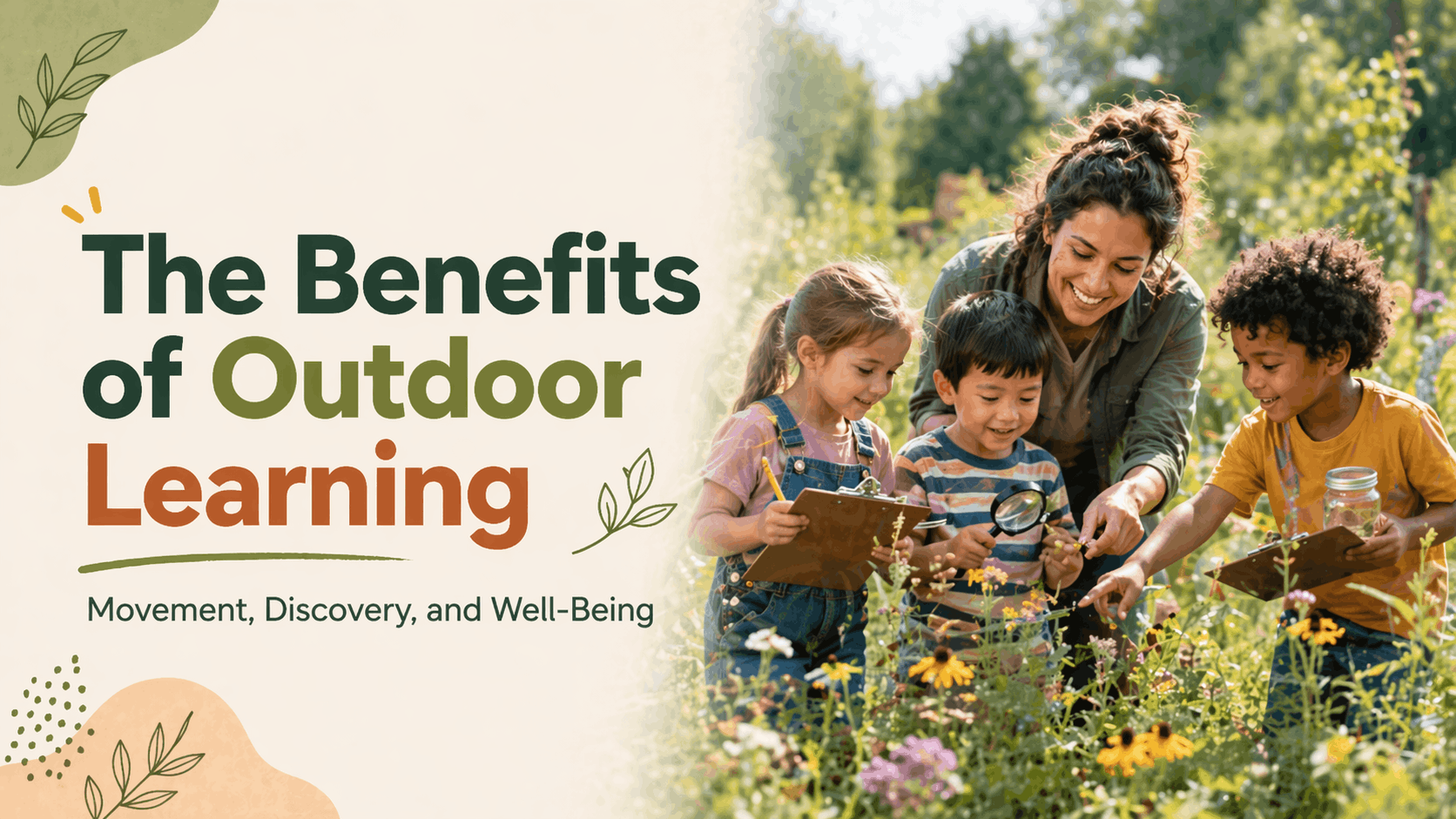
Besides all the things we can teach children during a field trip or a nature walk, there are many other advantages to bringing the learning outdoors. Firstly, stepping outside the classroom means motion and physical activity. We cannot expect children to stay seated for hours on end. Walking, jumping and running will help them feel healthier and also improve their motor skills. Moreover, exercising produces endorphins, dopamine, serotonin and all these fantastic happy hormones that generate pleasure and well-being.
Secondly, contact with nature together with physical activity helps reduce negative emotions such as stress and anxiety. It also helps children boost their self-esteem, favors good sleep and avoids feelings of depression. When you go outside, you expand the field of possibilities in terms of movements, emotions and learning. In a nutshell, it is good for your body, brain and mental health. We sometimes think that we learn only through our brain. In reality, learning comes primarily from our five senses, and there is no better place than nature to explore our sensations. When we go outdoors, we always discover new sights, sounds, smells, textures and tastes.
Finally, our generations are living in an unprecedented situation in which our planet is threatened by our own actions. In order to protect the environment, children have to know it and discover how it works. We know that recycling trash at home is not enough: we need a deeper understanding of the natural cycles and the resources of our planet. For all these reasons, we are happy to offer you 10 examples of activities you can do during a nature walk.
8 Great Ideas of Nature Walk Activities
1. Nature Scavenger Hunt
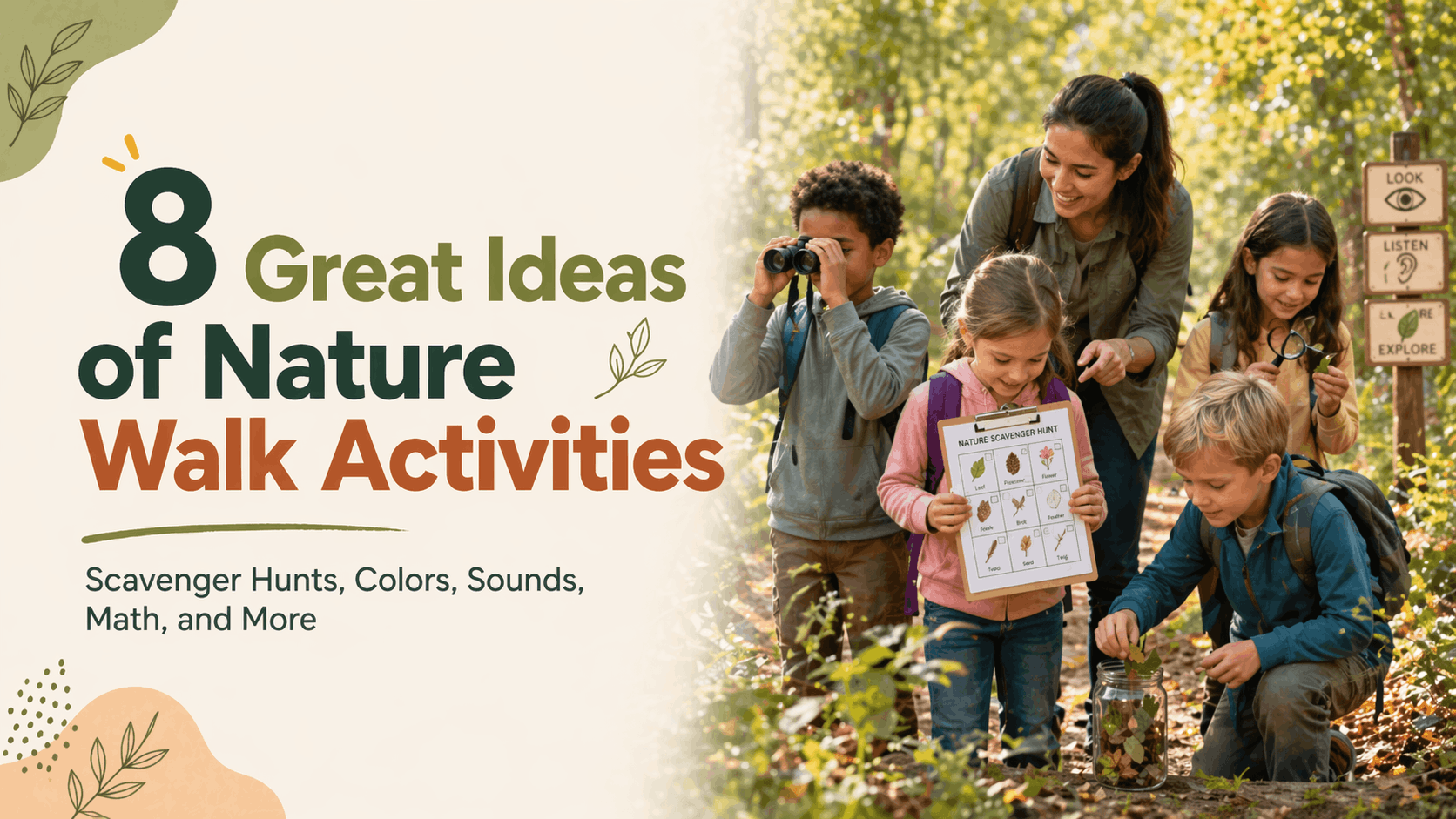
Children love scavenger hunts. And there are so many options for teachers to design great scavenger hunts that kids will never get bored! The first thing is to design one that is specific to the area your pupils will explore and the season you are in. You can use a list of items to find, animals, flowers, plants, seeds, minerals, etc. If needed, you can ask them to bring photographic evidence of what they saw. You can also give them a piece of paper with drawings of what they need to find. Another option is to prepare a set of clues for them to find items in order until they reach the final goal. These scavenger hunts will develop a lot of abilities, among them motor skills, observation, problem-solving and teamwork.
2. Living Colors
If you want to make your pupils discover the many colors of nature, you can organize a scavenger hunt based on colors. You can ask them to take their crayons or colored pencils and try to find something that matches these colors. If possible, they can also bring back the objects (flower petals, leaves of grass, seeds, rocks, soil, twigs) and paste them on a piece of paper where they will color with their pencils to show they found the right match.
3. The Concert of Nature
Humans use mostly their eyes for the observation of their surroundings. However, hearing is a sense that we need to develop as well. You can start by having your pupils sit in silence in a natural place and listen to every sound they hear. They can write them down and make a list. Then, you can allow them to move and sit at another place and complete their list with noises of insects, animals, birds or the wing through the leaves. They will realize that natural spaces are not silent but plenty of life.
4. Keep in Touch with Nature!
After you watched and listened to the nature around you, time to explore the textures of natural elements. You can make your pupils practice this with a scavenger hunt and a list such as: “Find something that is soft, fluffy, sticky, slippery, rough, silky, wrinkly, etc.” You can also ask them to bring papers and crayons to do leaf, bark or rock rubbings. It will help them discover the names of trees and plants around them.
5. Land Artists
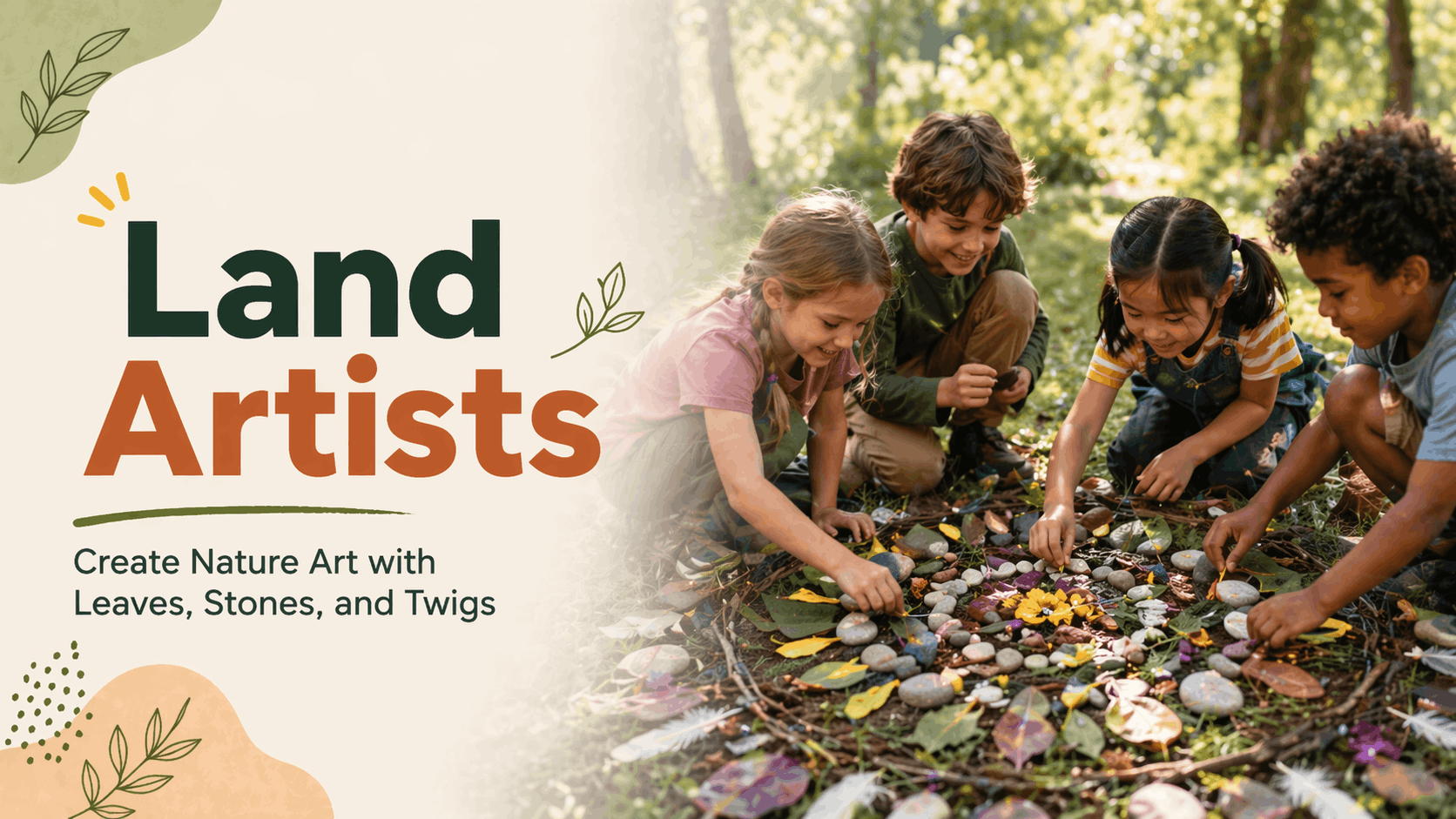
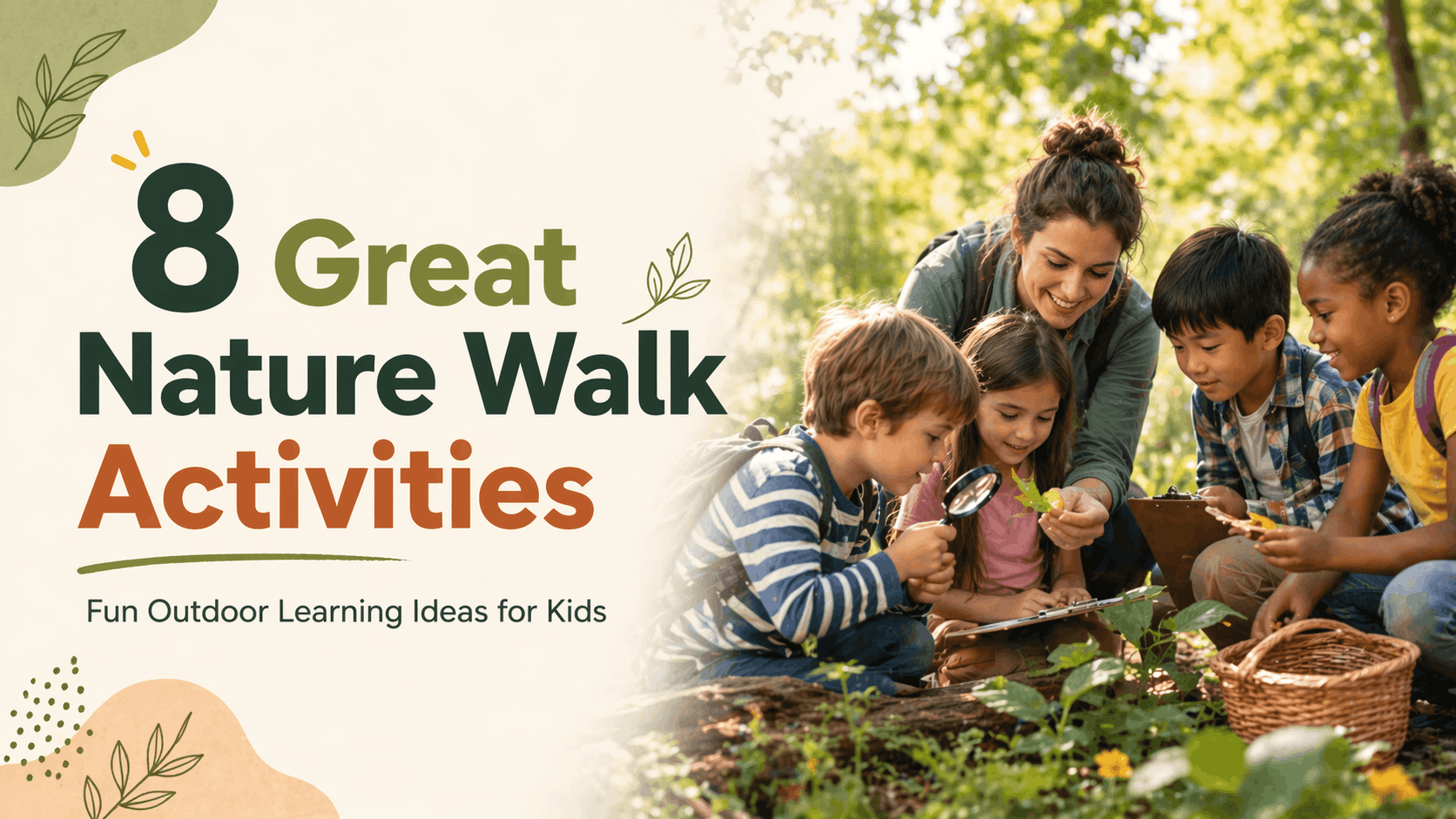
Ask your pupils to take a bag or a basket to gather all the natural treasures they can find, without harming the environment, of course! They can find rocks, grass, earth, leaves, seedpods, feathers, flowers. Once they have all their little treasures, a great follow-up activity is to create something artistic with them, figurative or abstract. They can create little characters or sculptures: a great introduction to Land Art!
6. Animal Watching
Make your children realize that humans are just one species living with 2 million others. You can ask them to find as many animals as they can. They can take pictures of them or use binoculars and magnifying glasses to observe birds and insects.
7. Math is Everywhere!
Take your math class outside! There are so many activities to do: math can be a practical subject. For instance, you can ask your students to study the patterns in nature and find symmetrical, round, cylindrical or oval things! You can use your nature walk to calculate areas and draw their own maps to get a sense of dimensions. You can also take advantage of the walk to make them measure their distance and average speed.
8. My Special Place
A great activity for children to closely observe nature and its cycles is to make them choose a specific spot (it can also be a single tree), and take observation notes and pictures throughout the school year. Therefore, they can observe the changes in colors, weather, fauna and flora. They can even keep a journal of their special place.