In the past, school and home were two separate worlds. In a nutshell, school was the place where children learned and home was the place where they relaxed. In recent years, things have changed faster than we could have ever imagined. The Covid-19 pandemic has modified the way parents and children have to consider home. Since it has become an active place of learning for almost every child, parents had to adapt to this new situation. Most of them had to become increasingly involved in their children’s education over the last 3 years.
Studies have shown that parental interest and support at home is key to a successful education. The more involved parents are, the better the child’s learning is: positive academic, social, and behavioral outcomes for students have been registered. According to a survey by the Center for American Progress, parents overwhelmingly agreed that they are involved with their children’s learning: 92 percent of parents agree or strongly agreed, compared with only 64 percent of teachers and 84 percent of school leaders. This raises several questions: what does it mean to be involved in your children’s learning? What does it entail? The core question is not IF parents should be involved, but HOW?
Homeschooling parents know that teaching is hard work, even more so when it comes to your own children. It requires a lot of abilities and time. During the pandemic, a lot of parents also had to become substitute teachers or teaching coaches, and this is not something you can learn overnight. Of course, home has always been a place of learning: we acquire information, values, social and emotional skills, our parents being our primary source of education. However, this parenting role is not the same as being a math, science, history or reading instructor.
To help you deal with this unprecedented situation, we offer you some advice to favor your children’s creativity, concentration, motivation and will to learn at home.
8 Tips to Foster Your Children’s Learning at Home
1. Show Them the Right Attitude
First of all, you have to show a positive attitude towards school and learning. Even if you don’t verbalize it, children can feel it if you think that school is boring and homework is a chore. To ensure that your kid does the homework and understands the topics studied at school, you can ask them to explain what he or she is learning. Great communication is key to successful learning. Showing your interest and enthusiasm will be contagious!
2. Be in Touch With Their Feelings
Children need encouragement and praise in order to build their self-confidence. Therefore, you should try and motivate them with positive messages, especially when they feel worried, unsafe or discouraged. Always show them you believe in their capacities. Then, you should always hear out what they have to say. If they feel upset or frustrated by certain activities, you should have a dialogue and come up together with a solution. Their dissatisfaction might come from an activity that is too difficult or not well-designed.
3. Create the Perfect Environment
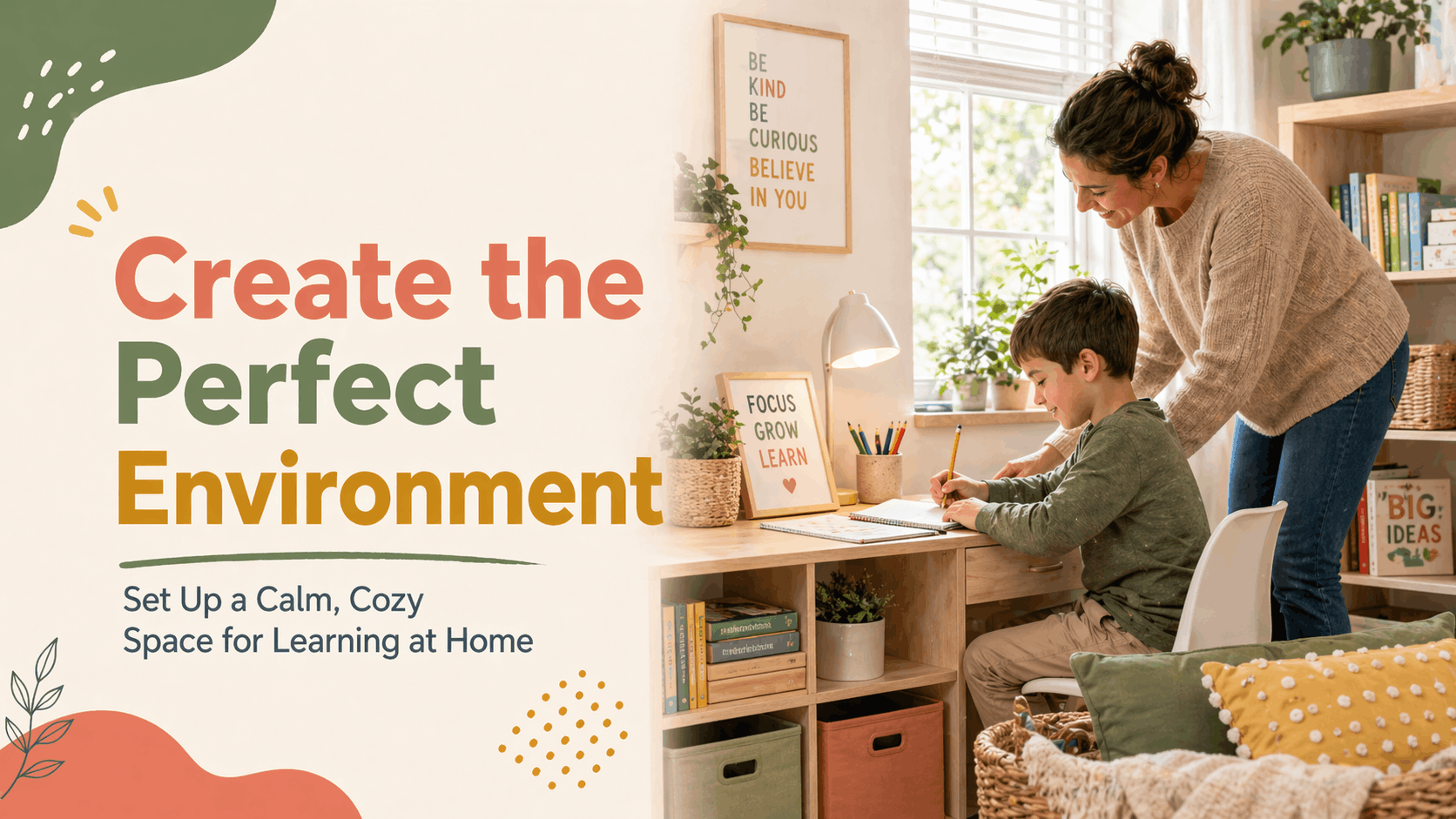
It is essential that every child has his or her own learning space. It can be a special corner in their bedroom. If the space is a shared room, try to separate it from possible distractions, for instance with a whiteboard, cardboard or cloth. Then, you should let your child decide on decoration to make the space warm and cozy. However, don’t overfill it with unnecessary things. A tidy and neat place is better for children to focus.
4. Give Them the Necessary Tools
The learning space should include all the tools that kids need. Sometimes the list can be long: paper, pens, crayons and pencils, glue and scissors should be within a hand’s reach, as well as books, especially the ones used as reference. Of course, the list of materials grows with age and grade. To keep things organized, you can use plastic or cardboard boxes.
5. Use Screens Reasonably and Efficiently
What about TVs, computers, tablets and phones? They are learning materials too. Online learning is on its way and there’s no stopping it. So how should parents deal with this technological revolution? It is always better to help kids to use digital tools in a healthy way that prohibit their use altogether or not control at all the amount of screen time. The first thing is to limit the time of TV watching and use digital devices for learning while making it fun too! You should also check and control all the websites your child will use for learning.
6. Make It Fun and Active!
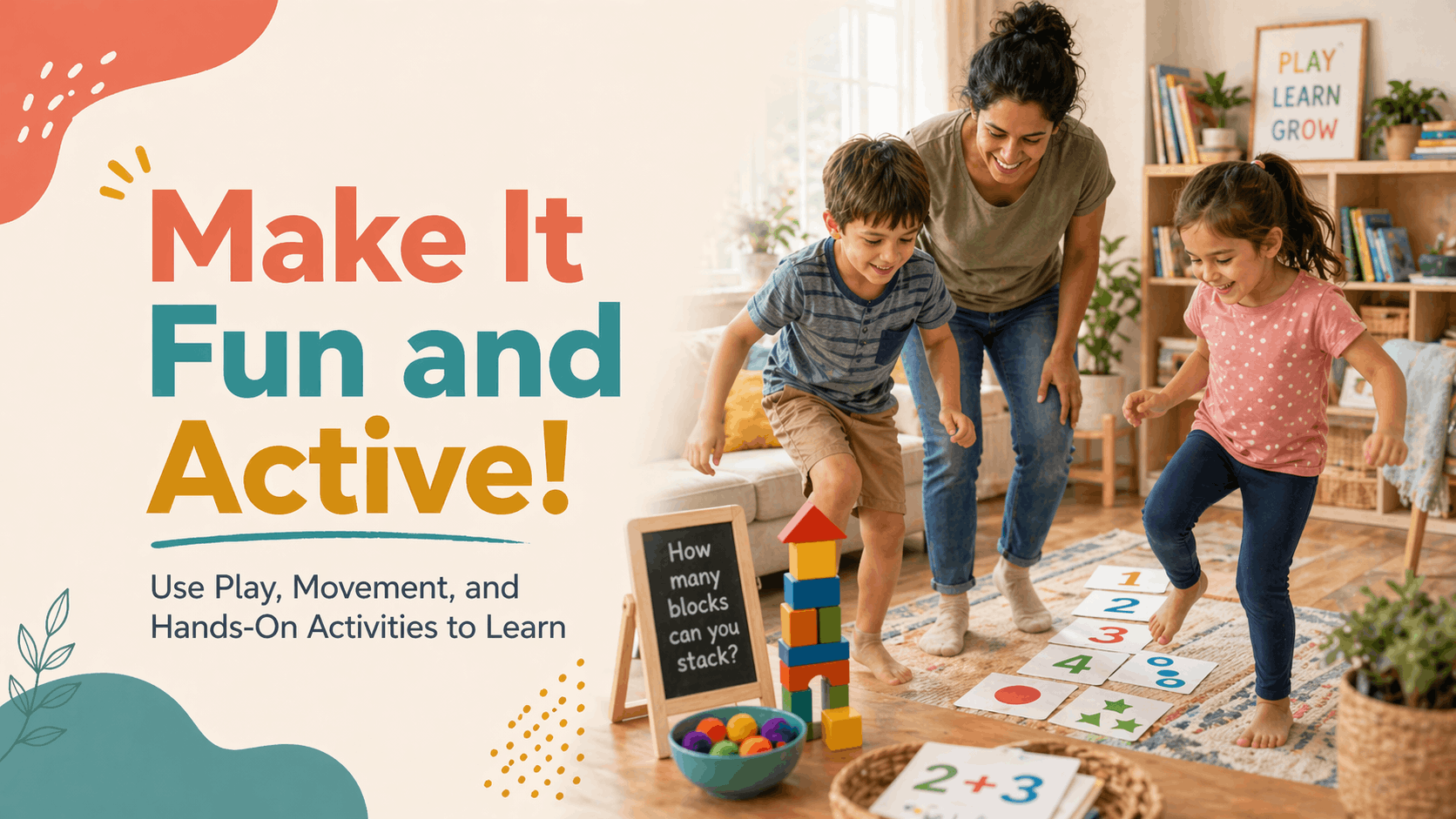
Children learn, both cognitively and emotionally, through playing, and they are well aware of it! Games, art projects and practical activities are always a great way, not only to apply theoretical knowledge but to learn new things in a different manner. Why not have a math or science lesson while cooking in the kitchen? Why not use a board game to practice letter and word recognition? Besides, children learn better through kinesthetic activity. Let them stand, walk or move in any way they like while they are in the process of learning.
7. Involve Relatives and Friends
Parents sometimes feel as the only people in the family responsible for teaching their kids. They are certainly the most important but it doesn’t mean that others cannot contribute. Children can learn a lot from their older siblings, but also uncles and aunts, cousins, grandparents, neighbors and friends. Social bonds are extremely important and every kid should be offered the opportunity to learn from a wide array of people.
8. Take Learning Outside
We saw the importance of a well-designed learning space inside the house or apartment, but we also established that children need to move in order to learn better. Going outside may be a positive change of scenery to encourage their thirst for learning. Playing at the park, using gardening tools, collecting things like leaves, stones or pinecones can be great ways to practice motor skills as well as their knowledge of the world. A walk in the woods is not only good for the body, it is great for the mind too!