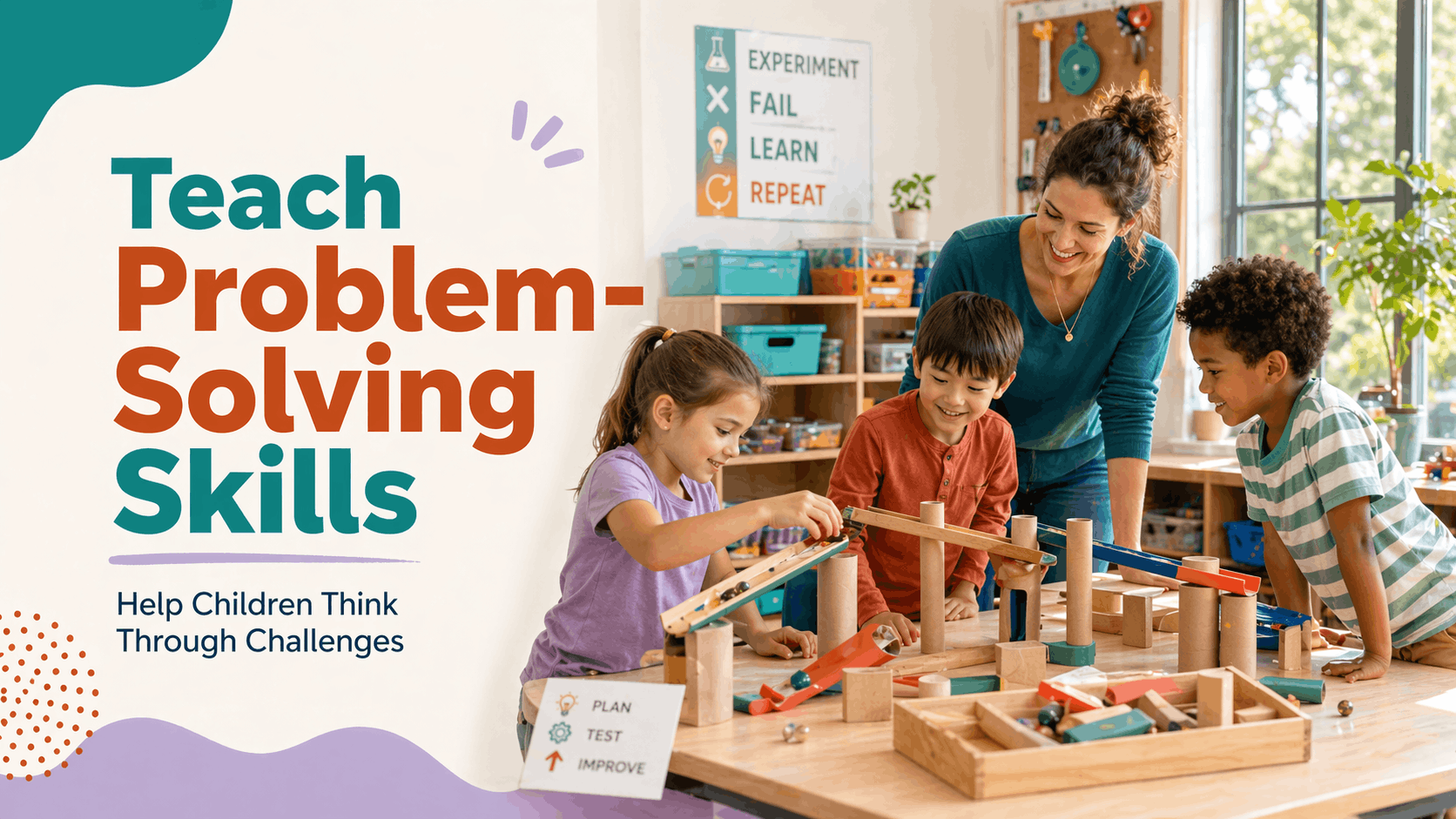
Life is not only about solving problems. Or is it? When we come to think of it, we spend most of our time making decisions in order to improve everyday situations and solve problems, big and small. Indeed, you need problem-solving skills if you are a head of state trying to avoid a military conflict or a child who wants to solve a simple jigsaw puzzle. In both cases, problem-solving is a process carried out in order to reach a goal and which includes overcoming difficulties and obstacles.
What Exactly is Problem-solving?
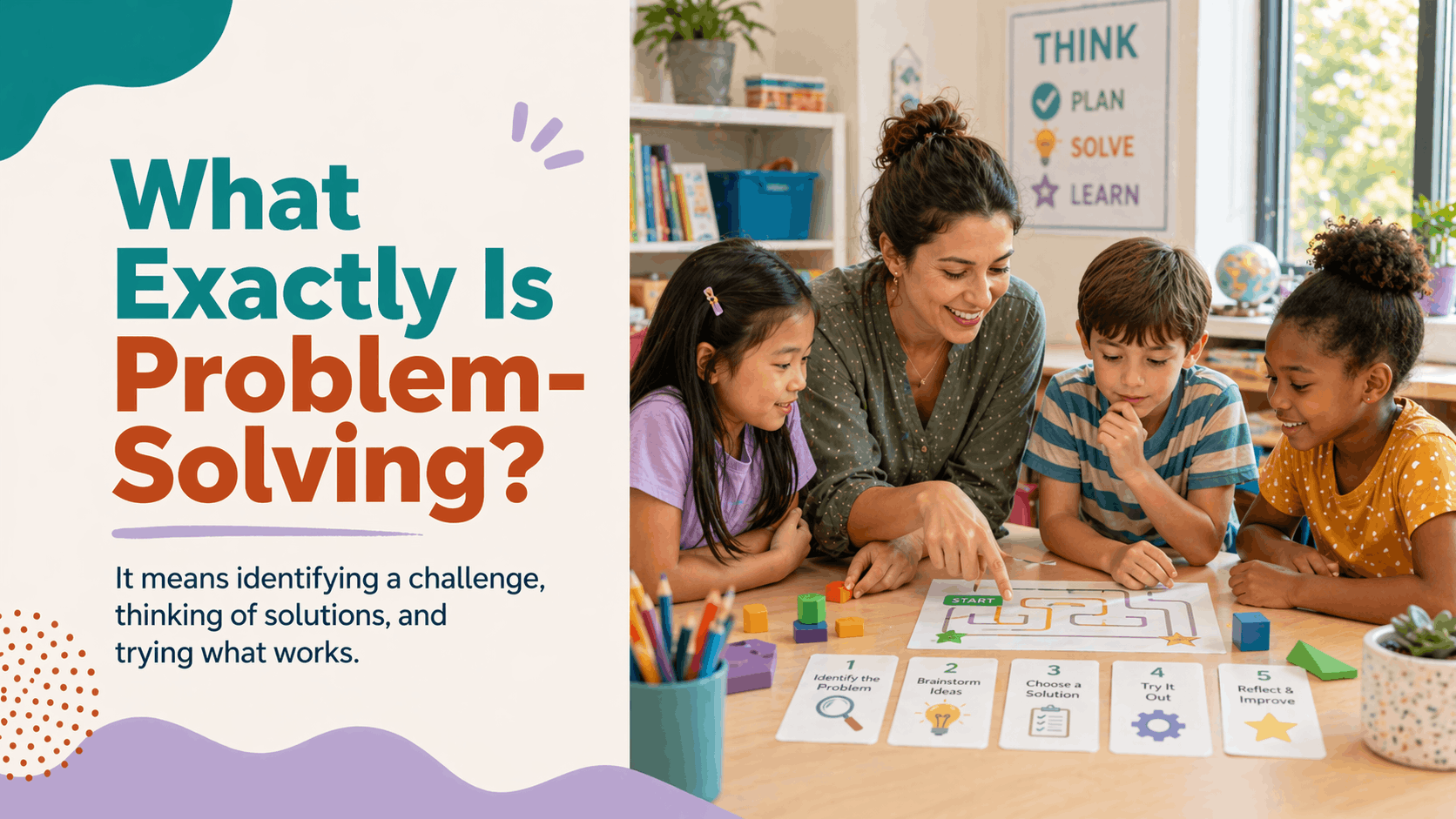
Problem-solving is a thought process that involves many aspects of human thinking. So what exactly do we need to find a solution? First, children and adults alike need to acquire technical skills to solve specific problems. For instance, children have to learn how to use a pen in order to write their name just like teachers need to know how to type in order to use a computer. We gradually master these skills through training and repetition, to put it in one word, our experience.
However, finding solutions implicates many more skills than just technical ones. Depending on the complexity of the problem, we have to make use of cognitive skills such as: logical and deductive reasoning, parallel and integrative thinking, analytical skills, curiosity and creativity. Yet cognitive and technical skills are still insufficient if we want to solve problems efficiently.
We also need to develop social and emotional skills. We often have to deal with our own emotions when faced with a problem, and most times they are negative ones (anger, sadness, frustration). Therefore, we need children to learn how to manage their feelings and turn them into assets, or at least prevent these emotions from hindering their problem-solving abilities.
Sometimes we must come up with a solution on our own but more often than not, we have to work with others. Therefore, we need to be aware of other people’s feelings and learn how to behave socially. After all, humans are social animals who live and work in groups and communities. That is why social and interpersonal skills such as empathy, teamwork, initiative, persuasion, negotiation and coordination are key to reaching a common goal and a solution that benefits everyone.
Why is It So Important to Develop Problem-solving Skills From a Young Age?
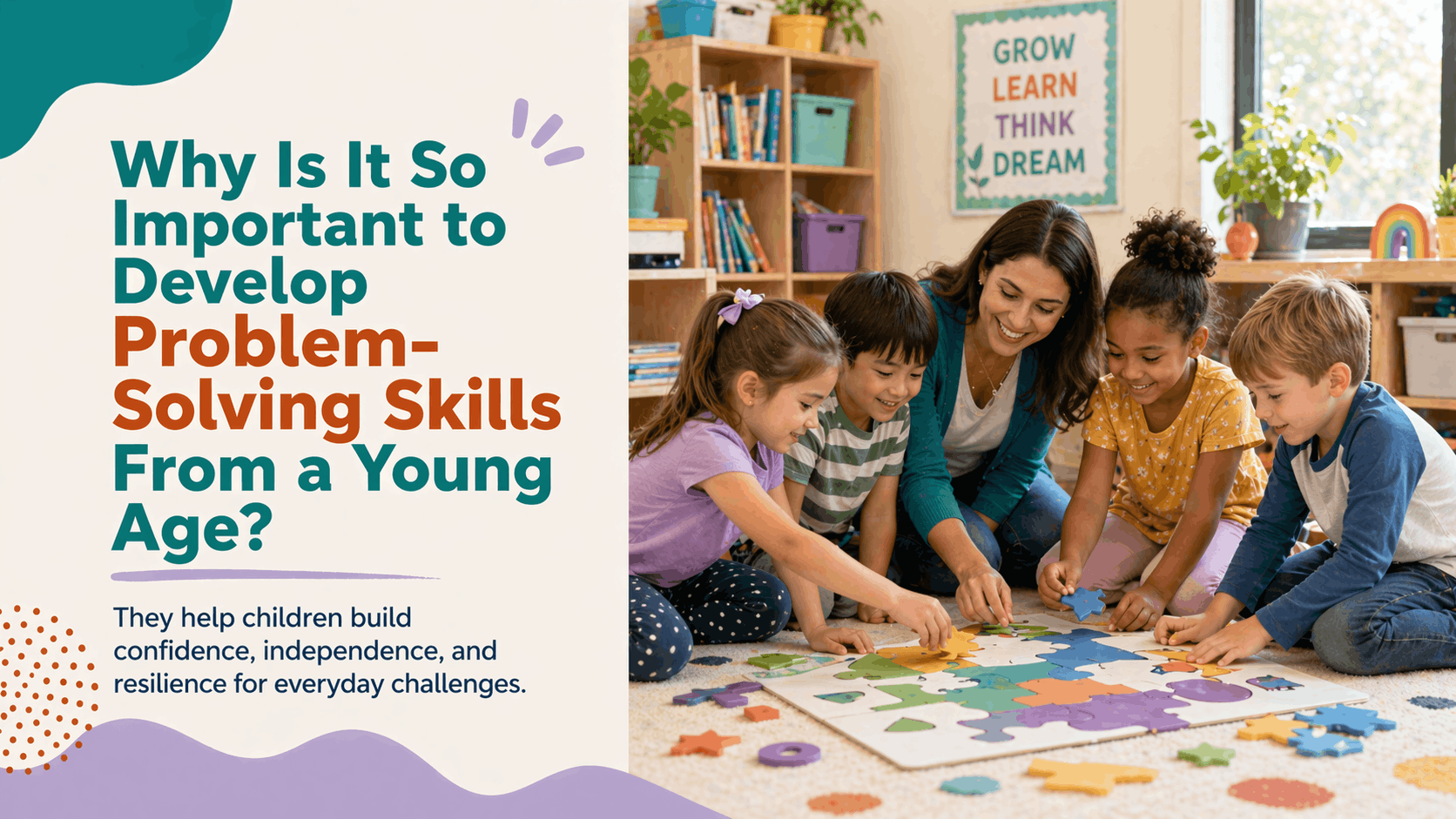
What do kids do when they cannot solve a problem? They just call an adult, whether it is their parents or their teacher. And what do adults need to do in this case? Help children find practical solutions to their problems without having to rely on them. It sure takes a lot of time, patience and teaching but the objective is vital: form independent, self-sufficient human beings.
At the age of 3, children have acquired the basic skills for problem-solving. They start experimenting a lot with toys, materials, the objects and people around them. They begin developing their problem-solving skills, mainly through the strategy of trial and error. This is when they understand that the same actions in the same circumstances produce the same outcomes. A little later, at age 4, they know how to solve problems cooperatively, they work together with adults and their friends. Needless to say, children have a short attention span and can have difficulty comprehending some of the problems they are faced with. As they grow up, they will solve more and more complex problems.
How Can We Teach Problem-solving Skills to Children?
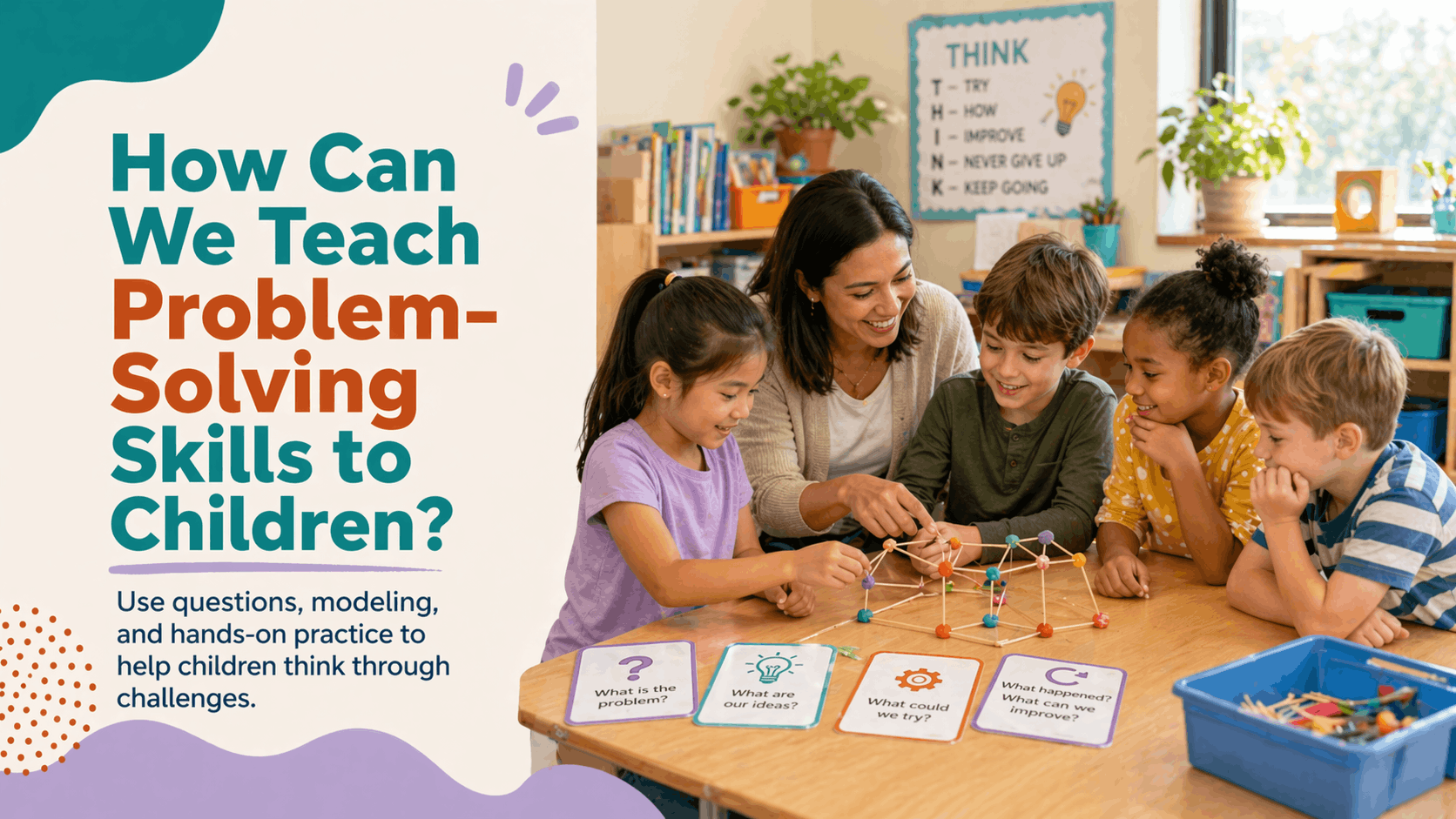
A single word is enough to answer this question: strategies! First of all, we need to recognize the problem, define the possible solution and develop a strategy to get there. Then, you gather knowledge and resources, monitor progress and finally check if the solution was effective. Nevertheless, before teachers start an activity that will help kids develop some of these strategies, there are a few things to take into account.
First of all, we have to make sure that kids are in control of their emotions. To foster reasoning, we need children to be calm, at peace with their bodies and feelings. Then, we need them to verbalize the problem. This is how kids can know for sure what their problem is. Once this is done, they can start brainstorming different solutions and evaluate them. Then, it is time to put them into practice, using different strategies, such as:
1. Trial and Error
This is the first strategy that children adopt. It consists of repeated and distinct attempts that go on until success is reached or they stop trying. This primitive method can lead to unsuccessful results and frustration. That is why we have to teach children more complex strategies to deal with their problems. At age 3, the amount of trial and error will decrease as they start using reasoning and logic much more.
2. Algorithm
You need to apply a formula with a list of steps to follow. For example, if a child wants to bake a cake for his or her mother’s birthday, an efficient solution may be following a recipe. Teachers may help their pupils by giving them activities in which they have to follow a list of instructions.
3. Divide and Conquer Algorithm
Many times, children will consider a problem as impossible or too big to solve. Therefore, we have to teach them how to divide a large problem into smaller ones. For instance, if they have to solve a large jigsaw puzzle, we have to help them come up with intermediate problems to solve. For instance, build the outline first, then focus on a specific part, etc.
4. Analogy
Sometimes we just have to adapt the solution to a previous problem with similar characteristics. That is why teachers should activate their pupils’ memory and make them practice a single strategy in different contexts.
5. Lateral Thinking
Lateral thinking is a strategy that approaches solutions in a creative and indirect way. There are many puzzles, challenges and riddles that can help teachers make their children think outside the box.